


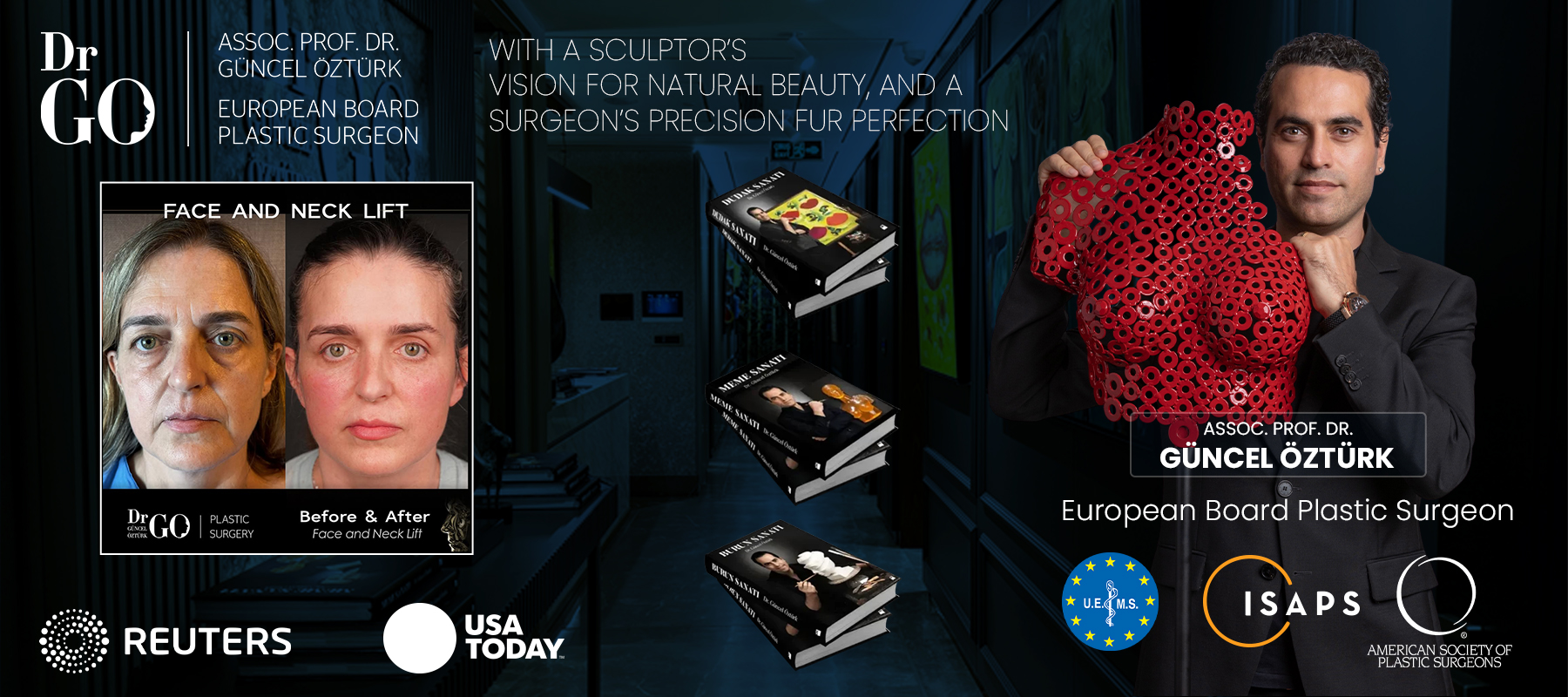
Assoc. Prof. Dr. Guncel Ozturk is recognized as the best facelift surgeon in Istanbul, Turkey, known for creating refreshed, natural-looking results that never appear tight or overdone. His approach focuses on restoring youthful contours—especially along the jawline, cheeks, and neck—while preserving each patient’s unique facial character and expressions.
Facelift surgery is not about changing who you are; it’s about turning back time with precision and balance. In Dr. Ozturk’s clinic in Istanbul, every facelift plan is designed around your facial anatomy, skin quality, and aging pattern, combining modern lifting techniques with meticulous detail to achieve a smoother, more defined, and harmonious appearance.
For local and international patients seeking a safe, high-standard facelift experience in Turkey, Dr. Ozturk offers a patient-centered journey—from consultation to recovery—built on surgical expertise, advanced methods, and a strong commitment to comfort, privacy, and long-term satisfaction.
Reading the Face Like a Map
A facelift consultation is not just a discussion about age—it’s an anatomical assessment. Dr. Güncel Öztürk’s evaluation begins by “reading” the face in sections, because aging doesn’t happen evenly. The cheeks, jowls, and jawline form a connected system; a change in one area often creates shadows, heaviness, or descent in another.
When midface support weakens, the cheek fat pads can descend, making the under-eye region look longer and the nasolabial folds (smile lines) look deeper. Many patients describe this as “my face looks tired even when I’m not.” In this stage, simply pulling skin won’t restore the youthful cheek-to-lid transition. The surgeon must assess:
- cheek projection and where volume has shifted
- the depth of folds and where they originate
- the relationship between the lower eyelid and the upper cheek
- skin quality and elasticity, which affects lift and recovery
Jowls appear when soft tissue descends and gathers along the jawline. Some patients have strong jawbones but still develop jowls because support structures weaken with time. Dr. Öztürk typically evaluates:
- the position of the jowl relative to the jawline
- asymmetry (one side is often heavier)
- how much of the jowl is skin laxity vs deeper tissue descent
- the connection between jowls and neck laxity (they often coexist)
The jawline is the face’s frame. A well-defined jawline doesn’t mean a sharp, harsh look—it means clean transitions from cheek to jaw and from jaw to neck. In consultation, key considerations often include:
- jaw angle definition and natural bone structure
- the thickness of the soft tissue layer over the jaw
- the submental area (under the chin), which can blur the profile
- how the jawline looks from the side, not only from the front
When these zones are evaluated together—as a map rather than isolated concerns—a facelift plan can target the real sources of aging instead of chasing surface-level tightness.
The Lift Is Not Just Skin
One of the most important shifts in modern facelift surgery is this: the best results come from deeper support, not skin tension. Skin is the cover, not the structure. If a surgeon relies on skin pulling alone, results can look unnatural and may not last as well. Dr. Güncel Öztürk emphasizes a deeper-tissue approach because it respects facial anatomy and helps preserve natural expression.
Under the skin is a supportive layer that surgeons often work with to reposition and secure facial tissues. When that deeper layer is lifted and stabilized, the skin can re-drape smoothly without being overstretched.
Patients frequently want jawline definition, but jowls are rarely solved by skin alone. A deeper-tissue lift helps reposition the tissue that creates the jowl bulge, allowing the jawline to appear cleaner and more structured.
Not every facelift is the same. Some patients benefit from a limited lift, while others need more comprehensive support for midface and neck. This deeper-tissue mindset supports what most patients want from a facelift in Istanbul: a refreshed look that still feels like them.
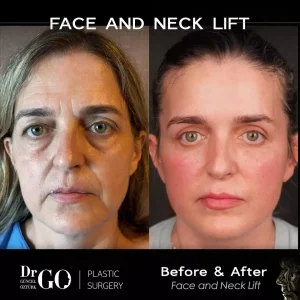
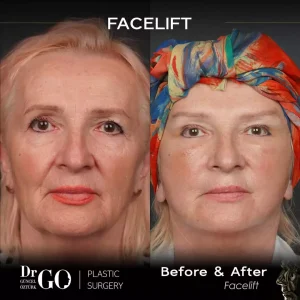
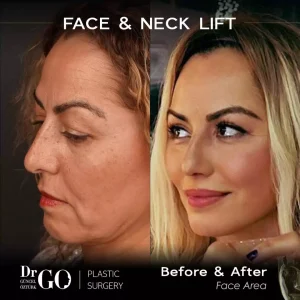
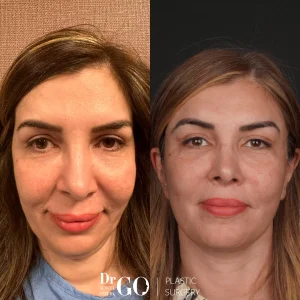
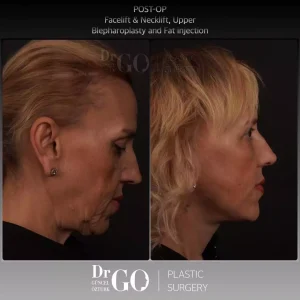
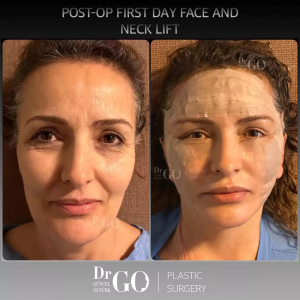
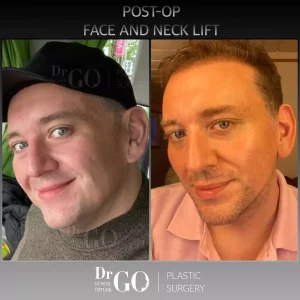
Tailored Rejuvenation: When Dr. Güncel Öztürk Combines Face Lift with Neck, Eyelids, or Fat Transfer
A facelift can transform facial contours, but the most harmonious outcomes often come from balanced rejuvenation. Sometimes the lower face improves beautifully, but the neck remains loose—or the jawline sharpens, but the under-eye area still looks hollow. Dr. Güncel Öztürk considers combination planning when it improves overall facial continuity rather than stacking procedures unnecessarily.
The face and neck age together. If the neck shows laxity, banding, or under-chin fullness, combining a facelift with neck refinement may create a smoother transition from jaw to collar line.
Upper or lower eyelids can create a tired look even if the jawline is refined. When eyelid concerns are significant, pairing procedures can help align the upper and lower face so the result looks consistent—not “lifted below but tired above.”
Aging can involve both descent and deflation. Some faces don’t only “sag”—they lose supportive volume in the cheeks, temples, or around the mouth. Fat transfer can restore softness and smooth transitions when used thoughtfully. Dr. Öztürk may consider it when:
- the midface looks flattened
- the temples appear hollow
- the under-eye region needs gentle support
- the goal is a softer, more natural rejuvenation rather than a tight lift
The key is restraint. Strategic volume can look youthful; excessive volume can look puffy. Tailoring matters.
The Blueprint Session
A facelift is not just about “younger.” It’s about balance—how features relate, how light falls across the face, and how symmetry is preserved while natural asymmetries are respected. Dr. Güncel Öztürk’s planning process can be thought of as a blueprint session: a structured way to map the outcome before any incision is made.
The best facelift results do not change someone into a different person. They restore a familiar version of the patient—one that looks rested and refreshed. Facial identity comes from:
- the relationship between cheekbone and jawline
- the shape of the smile and mouth corners
- the eye-to-cheek transition
- the natural softness or angles of the face
No face is perfectly symmetrical. The goal is not to erase every difference, but to prevent the lift from exaggerating asymmetry.
Some patients are “neck-first” agers. Others develop midface descent early. Some have strong cheekbones but significant lower-face heaviness. A blueprint approach aligns technique choices with your aging pattern so your results look cohesive and natural.
This kind of planning is a major reason international patients seek customized face lift surgery in Istanbul, Turkey: they want a tailored aesthetic strategy, not a generic template.
Dr. Güncel Öztürk’s Focus on Jawline, Jowls, and Midface Support
Many patients worry: “Will I look tight?” A modern facelift should look lifted, not pulled—and that difference comes down to contour. Dr. Güncel Öztürk’s focus on contours over tightness reflects a philosophy that prioritizes shape, structure, and natural draping.
A refined jawline doesn’t need to look sharp like a filter. It should look clean and stable, with a smooth transition to the neck.
Jowls improve best when tissue is repositioned anatomically. The direction of lift matters. Lifting should restore the youthful contour without distorting the mouth corners or creating tension around the lower face.
A facelift that ignores midface support may improve the jawline but leave the face looking “different” rather than refreshed.
When contour is prioritized, results tend to look more natural in motion—during speech, laughter, and expression—because the face is supported rather than stretched.
Custom Pairings: When Dr. Güncel Öztürk Recommends Neck Refinement, Eyelids, or Fat Transfer Alongside a Face Lift
Even when patients come in asking “just for a facelift,” a skilled surgeon evaluates whether small additions could improve harmony and longevity. The goal is not to add procedures—it’s to avoid an imbalanced outcome where one area looks rejuvenated and another still signals fatigue or aging.
If the jawline improves but the neck remains lax, the contrast can make the result look incomplete. Neck refinement may be recommended when:
- neck skin laxity is moderate to significant
- neck bands are visible at rest
- under-chin fullness blurs the profile
- the patient’s main goal is profile improvement
For some patients, the eyelids age more noticeably than the jawline. In those cases, combining procedures can produce a more consistent, refreshed appearance—especially in photographs and everyday conversation.
Some patients don’t need an aggressive lift—they need restoration of volume and soft transitions. Dr. Öztürk may recommend fat transfer as a “finishing” component when:
- cheeks lack youthful convexity
- the face looks hollow rather than heavy
- a softer rejuvenation is preferred over a sharper, more sculpted look
The best pairing is the one that makes the final result look complete. A facelift is not measured by tightness; it’s measured by how naturally youthful and balanced the face appears.
Frequently Asked Questions
Where are the incisions placed, and how are scars usually minimized?
Incisions are typically hidden around the hairline and natural creases in front of and behind the ear; scars are minimized with precise placement, gentle tissue handling, layered closure, and consistent aftercare (plus sun protection during healing).
When will swelling and bruising peak, and when do most patients look “presentable”?
Swelling and bruising usually peak around day 2–3; many patients look “presentable” for everyday social settings in about 10–14 days, with continued refinement over the following weeks.
Can I combine a facelift with eyelid surgery or fat transfer in one operation?
Yes—facelift is commonly combined with eyelid surgery and/or fat transfer when it improves overall facial harmony and can be done safely based on your health, anatomy, and surgical plan.
How long do facelift results typically last, and what affects longevity?
Results often last around 7–12 years (sometimes longer), depending on genetics, skin quality, technique, lifestyle factors (smoking, sun exposure), weight changes, and how your face naturally ages.
What are common facelift risks, and what steps help reduce them?
Common risks include hematoma (bleeding), infection, delayed healing, scarring issues, nerve irritation/weakness, asymmetry, and hairline changes; risk is reduced with proper pre-op assessment, safe surgical technique, careful blood-pressure control, no smoking, and strict aftercare/follow-up.
What’s the difference between tightening skin and repositioning deeper tissues (SMAS/deep plane)?
Skin-only tightening mainly pulls the surface and can look tight or relapse sooner, while SMAS/deep plane techniques reposition deeper support layers for a more natural contour, less skin tension, and typically longer-lasting structural improvement.
How long do swelling and bruising usually last after a facelift?
Visible bruising often fades within 2–3 weeks, while swelling improves significantly by 2–4 weeks; subtle swelling can take 6–12 weeks (and sometimes longer) to fully settle.
When will I look “socially ready” for photos or events?
Many patients feel photo-ready around 3–4 weeks, while major events are often best planned for 6–8 weeks post-op for a smoother, more settled look.
Where are facelift scars placed and how are they minimized?
Scars are usually placed in the hairline and around the ear contours to stay discreet; minimization focuses on strategic incision design, tension-free closure, scar care, and protecting scars from sun exposure.
Can I combine a face lift with eyelid surgery or fat transfer in one operation?
Often yes—combining procedures can create a more balanced rejuvenation and reduce total downtime, but suitability depends on your medical profile and the extent of surgery planned.
How long do facelift results typically last, and what factors affect longevity?
Typically 7–12 years, influenced by technique, skin elasticity, collagen quality, sun exposure, smoking, weight fluctuations, and skincare habits—plus the natural pace of aging.