

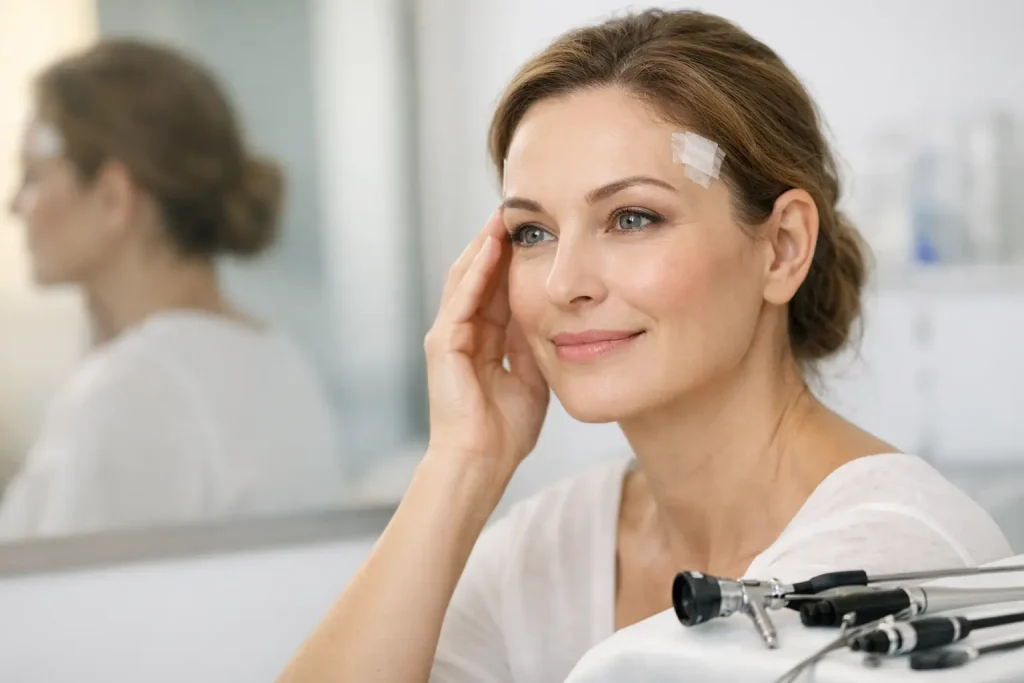
The first surprise for many patients is how discreet the recovery can feel compared with older brow-lifting techniques. An endoscopic brow lift uses small incisions hidden in the hairline and a camera-guided approach, which usually means less visible scarring, less tissue disruption, and a smoother return to daily life. That does not make recovery effortless, but it does make it more predictable when the procedure is planned and performed with precision.
For patients considering facial rejuvenation at a high level, recovery is not a side note. It is part of the aesthetic strategy. The way tissues settle, swelling resolves, and brow position refines over time all influence the elegance of the final result. Understanding the rhythm of healing helps you judge the process correctly and avoid the common mistake of evaluating too early.
Endoscopic brow lift recovery timeline
Endoscopic brow lift recovery tends to move in stages rather than one dramatic turning point. In the first 48 to 72 hours, swelling and a sense of tightness are usually at their peak. The forehead may feel firm, the scalp can feel numb or slightly tender, and the brows may appear higher than expected. This is normal in the early phase.
By the end of the first week, bruising often becomes easier to conceal and much of the initial swelling starts to soften. Patients who work in professional or social settings often feel more comfortable being seen after 7 to 10 days, especially if they can use light makeup around areas that are not restricted by their surgeon.
Between weeks two and four, the face begins to look more like itself, only more rested and open. Residual swelling may still linger, especially in the upper eyelid area or across the forehead, but it is usually subtle. Most patients are back to normal routines by this point, with the understanding that strenuous exercise and certain movements may still be limited.
The refined result takes longer. Brow position settles gradually, soft tissues relax into their new architecture, and the forehead starts to move more naturally as healing progresses. A realistic window for seeing a polished outcome is several weeks to a few months. In some patients, especially those with thicker skin or a stronger tendency toward swelling, refinement continues beyond that.
What you may feel during recovery
A common concern is pain, but discomfort after this procedure is often described more as pressure or tightness than sharp pain. The forehead may feel heavy. The scalp may feel numb, itchy, or unusually sensitive. Some patients notice a temporary headache-like sensation, particularly in the first few days. These symptoms are typically manageable with the medications and aftercare instructions provided by the surgical team.
Numbness deserves special mention because it can be unsettling if you are not expecting it. Temporary changes in sensation along the scalp or forehead are not unusual after an endoscopic approach. Small nerves are stretched and irritated during surgery even when every effort is made to preserve them. Sensation usually improves gradually, not overnight.
Sleep can also feel awkward at first. Many surgeons recommend keeping the head elevated to reduce swelling, and patients who normally sleep on their side or stomach may need to adjust temporarily. This sounds minor until the first postoperative night. Planning ahead with supportive pillows often makes the first week easier.
Swelling, bruising, and how your appearance changes
The visual changes of recovery are often more dramatic to the patient than to anyone else. Swelling can migrate. It may start in the forehead and move downward around the eyes. This can make the upper eyelids look puffy or create bruising that changes color over several days. That shifting pattern is part of normal healing.
One detail that often causes concern is asymmetry in the early period. One brow may appear slightly higher, one side may hold more swelling, or one upper eyelid may seem more open. Early asymmetry is common because the two sides of the face never swell in exactly the same way. The final judgment should wait until tissues have settled.
Hair washing, showering, and looking closely at the incisions can raise anxiety as well. Because the incisions are small and hidden in the scalp, patients may expect them to feel invisible immediately. In reality, the scalp can remain sensitive for a time, and the incision areas may feel raised or firm before they mature. This does not usually affect the cosmetic elegance of the result.
Recovery after an endoscopic brow lift versus classic techniques
One reason patients choose this method is that endoscopic brow lift recovery is usually more favorable than recovery after a traditional open brow lift. Smaller incisions and less extensive dissection generally translate into less visible trauma and often a shorter social downtime. For image-conscious patients, that matters.
Still, less invasive does not mean trivial. If the brow lift is combined with upper eyelid surgery, fat grafting, facelift surgery, or laser treatments, the recovery experience changes. Combination surgery can be beautifully efficient from an aesthetic perspective, but healing becomes more layered. A patient having a brow lift alone may feel presentable sooner than someone recovering from a full facial rejuvenation plan.
This is why honest preoperative planning matters. The best recovery is not created by optimistic promises. It is created by selecting the right technique for the anatomy, the right degree of lift for the face, and the right timing for a patient’s social and professional calendar.
How to support healing well
The most successful recoveries are usually quiet and disciplined. Rest matters in the first days, but so does gentle movement. Short walks can support circulation, while overexertion can increase swelling and prolong the recovery window. Patients who feel good too quickly sometimes make the mistake of resuming exercise, bending heavily, or returning to demanding routines before tissues are ready.
Cold compresses may be recommended in the immediate period, depending on the surgeon’s protocol. Hydration, low-sodium meals, and avoiding alcohol can also help minimize swelling. Nicotine is especially problematic because it compromises circulation and can interfere with tissue healing.
Sun protection is another overlooked detail. Freshly healing skin and scars are more vulnerable to discoloration. Even when the incisions are hidden in the scalp, the surrounding facial skin benefits from careful protection. For patients investing in refined rejuvenation, preserving skin quality during recovery is part of protecting the final aesthetic.
Medications and supplements deserve attention as well. Anything that increases bleeding risk, including certain over-the-counter supplements, should only be resumed according to medical guidance. This is one of those areas where a personalized postoperative plan is far more valuable than generic internet advice.
When can you return to work, exercise, and social life?
There is no single answer because recovery is influenced by anatomy, surgical technique, age, skin quality, and whether other procedures were performed at the same time. Even so, many patients can handle desk-based work within about a week if they are comfortable appearing in public. Others prefer to allow 10 to 14 days so they feel more polished rather than simply functional.
Exercise usually returns in stages. Light walking comes first. More intense workouts, weight training, yoga inversions, and anything that sharply raises blood pressure often need to wait longer. Rushing this step can increase swelling and discomfort at a point when healing seems to be going well.
Social events require a different kind of judgment. If the event is intimate, photographed, or professionally important, giving yourself extra time is wise. Looking acceptable and looking fully refined are not the same thing. Patients with demanding social calendars often appreciate this distinction once they see how subtle residual swelling can affect expression and brow shape.
What is normal, and what needs attention?
Mild tightness, swelling, bruising, temporary numbness, and a brow position that looks slightly exaggerated early on are generally normal. Mild itching along the scalp can also happen as the tissues heal. These changes usually improve steadily.
What deserves attention is worsening rather than improving symptoms. Significant asymmetry that appears suddenly, expanding swelling, severe pain, fever, drainage that looks infected, or visual symptoms should be reported to your surgeon promptly. Good recovery depends not only on surgical skill, but on attentive follow-up and clear communication.
At a specialist practice, recovery is monitored as carefully as the operation itself. That philosophy matters because facial surgery is judged in fine details. Patients who choose a premium approach are not simply paying for an hour in the operating room. They are investing in planning, technical execution, and the stewardship of the healing process.
The emotional side of healing
Even confident patients can feel uncertain during the first two weeks. You may look different before you look better. The mirror can show swelling, odd expressions, or brows that seem temporarily too elevated. This is the phase where patience becomes part of the treatment.
The most satisfying results usually come from patients who understand that facial refinement is gradual. Endoscopic brow lift recovery is not only about waiting for bruises to fade. It is about allowing the brow, forehead, and upper face to settle into a result that looks composed rather than operated on.
For patients seeking a sophisticated, natural elevation rather than an obvious surgical signature, that waiting period is worth respecting. If you approach recovery with realistic expectations, careful aftercare, and an expert surgical plan, the process tends to reward patience with a fresher expression that looks like you, only more rested and more defined. For more about advanced facial rejuvenation planning, patients may explore https://www.guncelozturk.com/en.