

A face rarely ages in just one way. Volume softens at the cheeks, skin texture becomes less even, the jawline loses definition, and expression lines begin to linger even at rest. That is why non-surgical facial rejuvenation methods work best when they are approached as a tailored composition rather than a single treatment session.
For patients who want refinement without surgery, the appeal is obvious – less downtime, lower procedural burden, and the possibility of gradual change. But premium results do not come from chasing every new device or injectable on the market. They come from selecting the right modality for the right anatomical issue, with a clear understanding of what non-surgical care can improve and where its limits begin.
What non-surgical facial rejuvenation methods actually treat
The most sophisticated treatment plans begin with diagnosis, not trends. A skilled injector or facial aesthetic specialist evaluates whether the concern is primarily dynamic movement, volume loss, skin quality decline, laxity, pigmentation, or contour imbalance. Each of these responds to a different category of treatment.
Dynamic lines, such as forehead creases, frown lines, and crow’s feet, are usually linked to repetitive muscle activity. Volume loss tends to affect the midface, under-eye transition, temples, and lips. Skin quality concerns include enlarged pores, dullness, acne scarring, and fine crepiness. Laxity appears as early jowling, softening of the lower face, and reduced support along the jaw and neck.
This distinction matters because patients often describe the visible result, not the structural cause. Someone may ask for under-eye filler when the real issue begins at the cheek. Another may request skin tightening when the dominant concern is volume depletion. Natural-looking rejuvenation depends on reading the face as a whole.
The leading non-surgical facial rejuvenation methods
Injectable neuromodulators remain one of the most precise tools for softening expression lines. When used with restraint, they relax selected muscles while preserving animation. The difference between a refreshed face and an overtreated one often comes down to dosage, placement, and aesthetic judgment. For many patients in their late twenties to forties, this is the first step in prevention and maintenance.
Dermal fillers serve a different purpose. Rather than reducing movement, they restore support, shape, and proportion. Hyaluronic acid fillers are commonly used for cheeks, lips, jawline, chin, and tear troughs, though not every area suits every product or every patient. In experienced hands, filler can create elegant transitions and subtle lift. In inexperienced hands, it can create puffiness, distortion, and a face that looks treated instead of refined.
Biostimulatory injectables are increasingly relevant for patients who want collagen-focused improvement rather than simple volumization. These treatments aim to stimulate the skin’s own regenerative response over time. The effect is often quieter than traditional filler, but for the right candidate, especially in cases of early laxity or diffuse facial thinning, the result can be sophisticated and durable.
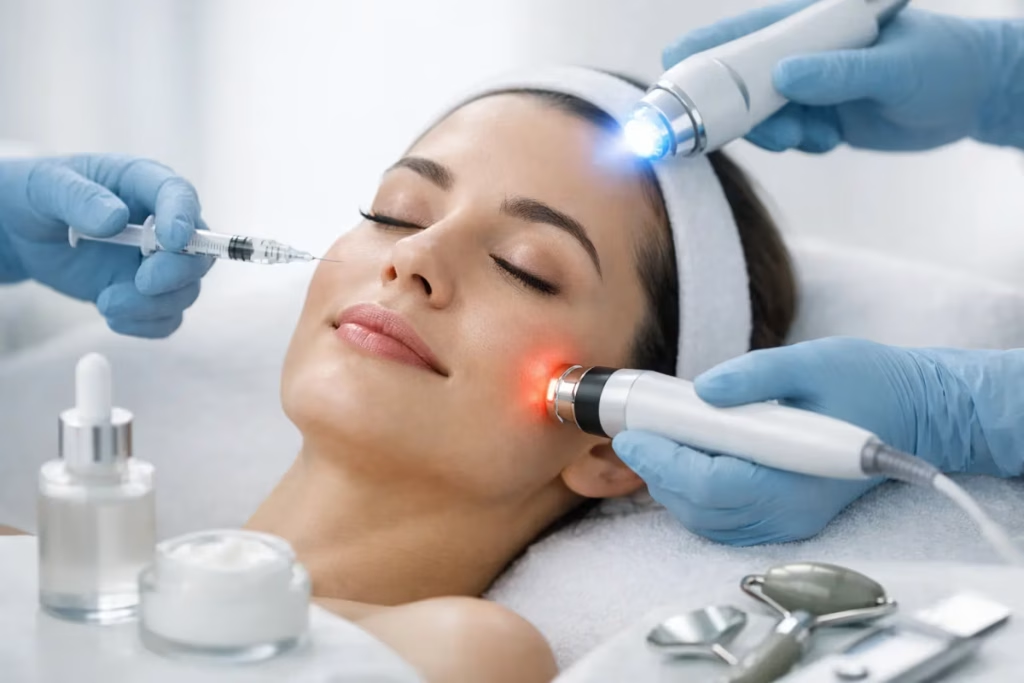
Skin quality treatments occupy another essential category. Laser resurfacing, radiofrequency-based procedures, microneedling, and regenerative protocols can improve texture, pore appearance, fine lines, and overall radiance. These are not interchangeable technologies. Some target pigment, others target collagen remodeling, and others are better suited for scar revision or early tightening. Skin type, downtime tolerance, and the degree of correction needed all shape the decision.
Energy-based tightening treatments can be useful when surgery is not yet indicated or not yet desired. Ultrasound and radiofrequency platforms are often chosen for mild to moderate laxity. They can support collagen remodeling and improve contour subtly, but expectations must be realistic. These technologies can refine, not replicate, a surgical lift.
Regenerative approaches also deserve attention. Platelet-rich plasma and selected exosome or cellular-support protocols are often used to improve healing, luminosity, and skin vitality. They are especially attractive to patients who value biologic rejuvenation and a more progressive treatment philosophy. Still, they are usually adjuncts rather than stand-alone solutions for advanced aging changes.
How to choose the right method for your face
The best plan is rarely built around a single product category. It is built around your anatomy, your age-related changes, and your appetite for downtime. A younger patient with expressive forehead lines and good skin elasticity may do beautifully with neuromodulators alone. A patient in their forties may benefit more from a layered strategy that combines filler, collagen stimulation, and resurfacing. A patient with more pronounced descent or excess skin may be better served by surgery, with non-surgical treatments used for maintenance rather than substitution.
This is where expertise becomes visible. A premium facial assessment is not a menu consultation. It is a design process. Facial proportions, light reflection, profile balance, skin behavior, and movement patterns all influence the treatment plan. In high-level aesthetic medicine, rejuvenation is not about making every line disappear. It is about restoring harmony while protecting identity.
Patients often ask whether it is better to start early or wait until aging becomes obvious. In many cases, earlier intervention allows for more subtle correction and less product over time. Preventive care can preserve structure and skin quality before changes become severe. At the same time, overtreatment in the name of prevention is its own problem. The goal is measured intervention, not constant intervention.
The trade-offs patients should understand
One reason non-surgical facial rejuvenation methods are so popular is that they can deliver visible change without the commitment of surgery. But convenience should not be confused with simplicity. Every treatment involves trade-offs.
Injectables are flexible and often reversible, but they require maintenance. Skin treatments can improve quality dramatically, but they may involve multiple sessions and staged recovery. Energy devices can tighten modestly, but they are not a replacement for structural lifting when tissue descent is advanced. Regenerative options are attractive, but outcomes can be gradual and variable.
There is also the question of longevity versus precision. Some treatments produce quick improvement with shorter duration, while others build collagen more slowly and may evolve over months. The right choice depends on whether the patient values immediate correction, cumulative improvement, or a combination of both.
Another important trade-off is the difference between looking refreshed and looking altered. The modern premium patient usually wants the first, not the second. That requires restraint. More filler is not always more youthful. More toxin is not always more elegant. A face with preserved character almost always ages better aesthetically than a face treated according to trend cycles.
Why provider choice matters more than treatment choice
Aesthetic medicine has become crowded with devices, injectables, and heavily marketed promises. Yet the decisive factor is still the clinician. Technology matters, but interpretation matters more.
The face is not a flat surface. It is a dynamic structure shaped by bone, fat, ligament support, muscle movement, and skin quality. Treating one layer while ignoring another can create imbalance. That is why a surgeon-led perspective can be especially valuable even in non-surgical care. It tends to bring deeper anatomical understanding, stronger judgment around indication, and a clearer sense of when a non-surgical option is appropriate and when it is not.
At the premium end of aesthetics, patients are not only buying treatment. They are buying discernment. They want to know that the hand guiding the plan understands proportion, restraint, and the difference between enhancement and overcorrection. This is particularly important in visible areas such as the lips, under-eyes, jawline, and cheeks, where poor choices are difficult to hide.
For patients considering treatment in Istanbul, a specialist center such as DRGO Clinic may offer the advantage of surgical expertise combined with advanced non-surgical planning, which is often the right combination for natural facial refinement.
When non-surgical options are enough – and when they are not
This is where honest consultation becomes more valuable than sales language. Non-surgical treatment is often enough for early signs of aging, maintenance after surgery, or selective refinement in patients who still have good skin support. It may also suit those who prefer gradual enhancement and are comfortable with upkeep.
It is often not enough for significant jowling, marked neck laxity, heavy lower face descent, or advanced eyelid aging. In these cases, repeated non-surgical treatments can become expensive, inefficient, and aesthetically compromising. A refined surgical procedure may ultimately offer a cleaner and more coherent result.
There is no loss of prestige in needing surgery, just as there is no virtue in forcing surgery too early. The most elegant treatment plan is the one that respects timing.
A well-treated face should not announce the method. It should simply look rested, balanced, and quietly elevated. That is the real promise of non-surgical rejuvenation when it is guided by expertise rather than excess.