

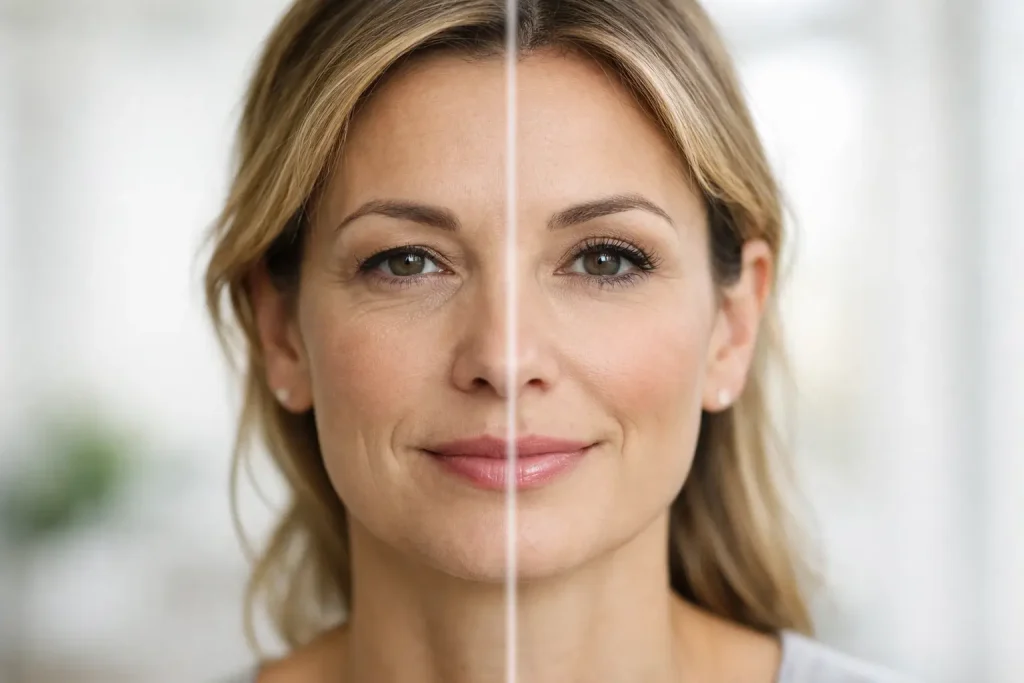
A tired upper eyelid can make the entire face look heavier, stricter, or older than it truly is. That is why one of the most common questions in consultation is essentially this: Does Eyelid Surgery Change Facial Expression? The short answer is yes – but the real issue is how, how much, and whether that change looks refined or artificial.
Eyelid aesthetics, or blepharoplasty, does not simply remove skin. It rebalances one of the most expressive areas of the face. The eyes carry emotion, alertness, softness, and vitality. Even a technically correct procedure can feel aesthetically wrong if that expressive balance is ignored. For this reason, the most successful eyelid surgery is never just about subtraction. It is about preserving identity while restoring clarity.
Does Eyelid Surgery Change Facial Expression?
Yes, it can change facial expression, but in well-planned surgery the goal is not to create a new expression. The goal is to remove the visual barriers that distort your natural one.
Heavy upper lid skin may create a fatigued or stern appearance. Puffiness under the eyes can suggest stress, sleep deprivation, or age-related volume shift even when the patient feels energetic and well. When these elements are corrected thoughtfully, the face usually appears more open, rested, and engaged. Friends often say, “You look better” or “You look less tired,” rather than “You look different.”
That distinction matters. A premium result does not advertise surgery. It restores harmony.
Why the eyes change the entire face
The eyelid region occupies a relatively small area, but it has an outsized effect on perception. We read emotion from the eyes before almost anything else. A low or overhanging upper lid can make a person seem sleepy or tense. Hollowing near the upper eyelid may make the face look drawn. Lower lid bags can create shadows that suggest exhaustion.
Because the eye area is central to facial communication, even subtle surgical changes can influence how the whole face is interpreted. This is why two patients with the same amount of excess skin may require very different surgical designs. One may need conservative skin excision only. Another may benefit from muscle support, fat repositioning, or brow assessment as part of a broader plan.
Expression is not created by the eyelid alone. It is shaped by the brow position, forehead dynamics, skin quality, orbital anatomy, cheek support, and the relationship between light and shadow. Treating the eyelid in isolation can sometimes create a result that is technically cleaner but aesthetically incomplete.
When eyelid surgery improves expression naturally
The most elegant blepharoplasty results tend to share one quality: they make the patient look like themselves on a very good day.
This happens when surgery respects the natural architecture of the eye. Excess upper lid skin is reduced without making the lid look hollow or overexposed. Lower lid fullness is softened without flattening the under-eye area unnaturally. The transition between the eyelid and cheek remains smooth. In other words, the procedure refreshes rather than erases.
For many patients, the expression after surgery appears lighter, calmer, and more awake. This is especially true when drooping tissue had been masking the upper eyelid crease or pushing visual weight downward. Once that heaviness is removed, the eyes regain definition. The face can look brighter without losing maturity or character.
In refined facial aesthetics, this is the ideal outcome: not a new face, but a more accurate version of your own.
When the result can look different in the wrong way
The concern behind the question Does Eyelid Surgery Change Facial Expression? is usually not about change itself. Most patients want improvement. The concern is looking surprised, pulled, hollow, or unlike themselves.
That concern is valid. Eyelid surgery can produce an unnatural expression when too much skin is removed, when fat is over-resected, or when the procedure ignores brow position and lower lid support. A patient may end up looking overly tight, skeletal, or unable to close the eyes comfortably. In some cases, the eyes may appear rounder or more startled than before.
This is where surgical judgment becomes far more important than a simple plan to “take away excess.” The eyelid ages through both excess and loss. Some patients have extra skin and puffiness. Others also have volume deficiency, brow descent, or laxity in the lower lid. If every concern is treated as a removal problem, the face can lose softness and expression.
A sophisticated approach studies what should be reduced, what should be preserved, and what should be repositioned.
Upper eyelids, lower eyelids, and different expressive effects
Upper eyelid surgery has the strongest effect on how alert or rested a person appears. If excess skin has been folding over the lash line, the face may read as chronically tired. After surgery, the eyes can appear more open and defined. However, if correction is too aggressive, the patient may lose the gentle softness that makes the eye area attractive and natural.
Lower eyelid surgery affects freshness more than alertness. Prominent under-eye bags create shadowing and visual heaviness. When these are improved properly, the face often looks less fatigued and more youthful. But lower lid surgery requires particular restraint. Removing too much fat can age the face instead of rejuvenating it. Modern aesthetic thinking often favors reshaping and redraping rather than simply emptying the area.
In some patients, combining upper and lower blepharoplasty creates the best balance. In others, treating only one area is wiser. More surgery is not always better surgery.
The role of brow position and facial design
A drooping brow can mimic upper eyelid excess. If the brow is descending and only the eyelid skin is removed, the improvement may be limited or the result may feel heavy again sooner than expected. This is one reason advanced consultation should include the relationship between forehead, brow, eyelid crease, and orbital contour.
This design-based view is especially important in premium facial aesthetics. The eye should not be planned as an isolated structure. It belongs to a larger composition. At Dr. Güncel Öztürk’s level of aesthetic practice, that composition is approached with both surgical discipline and artistic analysis.
For some patients, the right answer is blepharoplasty alone. For others, the best expression comes from combining eyelid surgery with brow refinement, fat transfer, skin quality treatments, or other facial rejuvenation strategies. The correct plan depends on anatomy, age, tissue behavior, and desired style of outcome.
What determines whether you still look like yourself
Natural results are rarely accidental. They depend on conservative planning, precise technique, and a surgeon who understands the emotional language of the face.
Several variables shape the final look: your bone structure, the degree of skin laxity, the amount and position of orbital fat, brow level, asymmetries, healing patterns, and even your baseline facial expression. Some people naturally have a stronger or more dramatic eye shape. Others suit a softer contour. Surgery should respect these differences rather than forcing every patient toward the same aesthetic formula.
Recovery also affects perception. In the early weeks, swelling can temporarily make the eyes look different from the final result. Some patients worry too soon that they look too open or too changed. As swelling settles and tissues relax, the expression becomes more natural and integrated.
This is why experienced surgeons set expectations carefully. The first phase after surgery is not the final portrait.
A better question than “Will it change my expression?”
The more useful question is this: what part of my current expression is anatomy, and what part is age-related distortion?
If hooding, puffiness, and under-eye heaviness are making you look more tired, stern, or older than you feel, eyelid surgery may restore alignment between your appearance and your energy. That is a meaningful kind of change. It does not replace your identity. It removes noise from it.
The best blepharoplasty does not chase an exaggerated look. It creates precision, lightness, and continuity. It lets the eyes speak more clearly, not more loudly.
If you are considering eyelid surgery, choose your surgeon with that philosophy in mind. Ask not only how much skin will be removed, but how your expression will be protected. In facial aesthetics, that is where technical ability ends and true artistry begins.