

Arm lift surgery recovery is not difficult – but it is disciplined
Most patients are less concerned about the incision than they are about the first moment they try to reach for a glass, adjust a pillow, or put on a fitted top. That is when recovery becomes real. Arm lift surgery recovery is usually very manageable, but it asks for patience, consistency, and respect for the healing process.
An arm lift, or brachioplasty, removes excess skin and may also refine the arm contour after weight loss, aging, or changes in tissue quality. The procedure can create a far more elegant upper arm line, but the quality of the final result depends not only on surgery itself. It also depends on how carefully the tissues are allowed to settle, how swelling is managed, and how responsibly activity is resumed.
For patients who value a refined outcome, recovery should be viewed as part of the design process. The operation creates the new contour. Healing reveals it.
What to expect right after surgery
Immediately after surgery, the arms usually feel tight, heavy, and somewhat restricted. This sensation is normal. The skin and deeper tissues have been repositioned, and the body responds with swelling, bruising, and temporary stiffness.
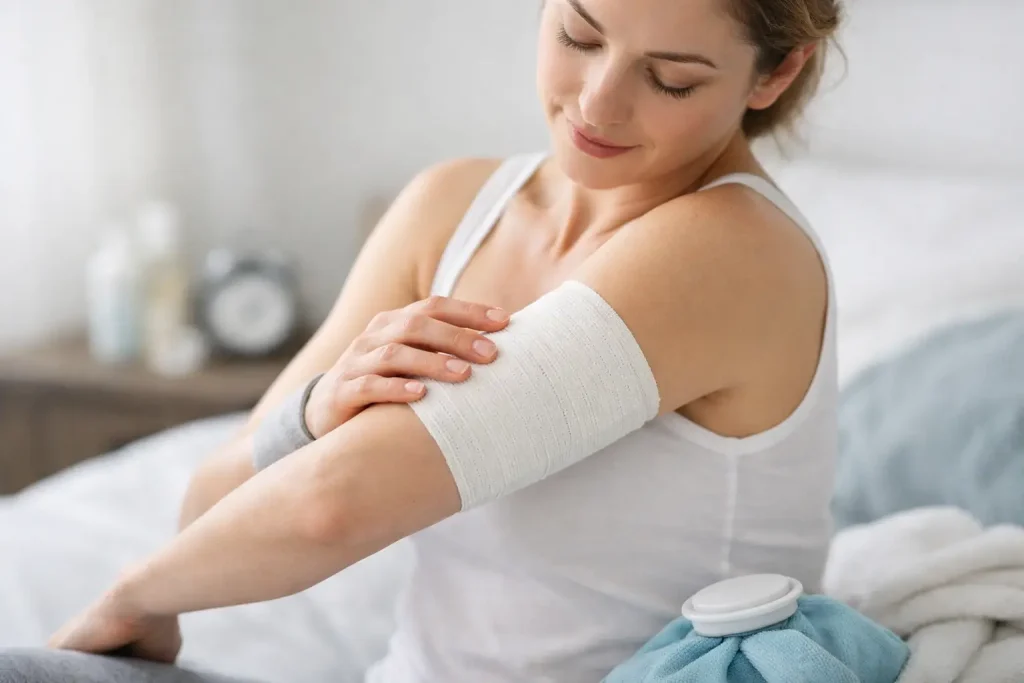
Compression garments are commonly used to help support the tissues and reduce swelling. In some cases, small drains may be placed for a short period, depending on the extent of correction. Patients are often surprised that discomfort is less dramatic than expected, but movement can feel awkward in the first several days. Simple tasks such as dressing, washing hair, or lifting the arms overhead may require assistance.
During this phase, the goal is not to “test” the result. The goal is to protect it. Careful rest, short walks, hydration, and medication compliance matter more than trying to return to normal too quickly.
The first week of arm lift surgery recovery
The first week is usually the most restrictive. Swelling is at its most visible, bruising can deepen before it fades, and the arms may look less defined than patients imagined. This can be emotionally frustrating, especially for those expecting an immediate sleek contour. Early healing is rarely the moment to judge aesthetics.
Most patients are encouraged to keep the arms supported, avoid lifting, and sleep in a slightly elevated position if recommended by their surgeon. Reaching, pulling, and carrying should be limited because tension across the incision can affect healing and scar quality.
This is also the period when follow-up appointments are especially important. Dressings may be changed, drains removed if present, and the condition of the incisions assessed. A premium surgical result is protected through precise aftercare, not guesswork.
Weeks two to four: when daily life starts to return
By the second and third weeks, many patients feel significantly better. Bruising often fades, tenderness becomes milder, and mobility improves. That said, the tissues are still healing beneath the surface. Looking better does not mean being fully recovered.
This is the stage when people often become overconfident. They stop moving carefully, lift shopping bags, return to intense housework, or stretch the arms too aggressively. Those choices can increase swelling and place unnecessary stress on the incision line.
For many patients, light daily routines and desk-based work become more realistic during this window, depending on the extent of surgery and the physical demands of their lifestyle. If the procedure was combined with liposuction or other body contouring treatments, recovery may be slightly slower. It depends on how much correction was needed and how the individual body heals.
Compression may still be recommended, and incision care becomes more central. Once approved by the surgeon, scar management may begin with silicone-based products or other physician-guided strategies designed to support a finer, more discreet scar maturation process.
Swelling, numbness, and tightness: what is normal?
One of the most misunderstood parts of arm lift surgery recovery is that healing is not linear. Some mornings the arms appear slimmer, and by evening they can feel swollen again. Mild asymmetry in swelling is also common in the early phase. This usually improves with time.
Temporary numbness along the inner arm is not unusual. Small sensory nerves are affected during dissection, and sensation can take weeks or months to normalize. Tightness is also expected. In fact, patients often describe the upper arms as feeling “wrapped” or unusually firm at first.
These symptoms are not automatically signs of a problem. What matters is whether they are improving gradually and whether there are concerning changes such as marked redness, unusual drainage, fever, severe one-sided swelling, or escalating pain. Recovery always has normal discomforts, but it should still be monitored with precision.
Scar healing deserves honest discussion
Any meaningful arm lift involves a scar. That is the trade-off. Patients choose brachioplasty because they want to exchange loose, hanging skin for a smoother, more sculpted arm contour. For the right candidate, that is often a very worthwhile exchange, but it should be discussed with maturity.
Scar quality depends on several variables: surgical technique, incision placement, tension management, skin quality, genetics, aftercare, and sun protection. Early scars often look pink, firm, and more visible than the final result. This is normal. Mature scars take time.
The most elegant outcomes usually come from patients who understand that scar evolution is a long process, not a quick cosmetic detail. Protecting the incision from sun exposure, following garment instructions, and using surgeon-approved scar care can make a meaningful difference over the months ahead.
When can you exercise again?
This depends on the type of activity. Walking is typically encouraged early because it supports circulation and helps patients feel less stagnant. Vigorous upper-body exercise, weight training, yoga positions that load the arms, swimming, and high-impact routines usually require more time.
The mistake is assuming that cardiovascular fitness means surgical readiness. A very fit patient can still disrupt healing by returning to movement too aggressively. The internal tissues need stability before they can tolerate strain.
Many surgeons allow a gradual return to lower-body exercise first, followed by a cautious progression into upper-body activity only after healing is sufficiently advanced. The exact timing should be individualized. A patient with minor skin laxity corrected through a shorter incision may progress differently from someone recovering after major contouring following significant weight loss.
When do results start to look refined?
Patients usually notice an early improvement in arm shape once the initial swelling begins to settle, often within a few weeks. But an early improvement is not the final result. Residual swelling can persist for months, and scars continue to mature well beyond the first stage of recovery.
The most polished result tends to emerge gradually. The arm softens, the contour becomes cleaner, and clothing fits with more ease. This is especially meaningful for patients who avoided sleeveless silhouettes for years because of skin laxity that could not be improved through exercise alone.
A beautifully performed arm lift should not make the arm look artificially tight or surgically obvious. It should create proportion, smooth transition, and a more youthful line. That level of refinement is seen best once healing has had time to unfold.
Recovery is also about planning your environment
A smooth recovery begins before surgery. Loose front-opening clothing, a well-arranged sleeping area, help with childcare or lifting tasks, and a realistic work calendar make the postoperative period far easier. Patients traveling internationally for surgery should be especially thoughtful about timing, accommodations, and follow-up planning.
For those seeking specialist-led aesthetic surgery in Istanbul, clinics such as DRGO Clinic typically emphasize not only operative technique but also structured aftercare, which is where many outcomes are either protected or compromised. Sophisticated surgery deserves equally sophisticated recovery guidance.
The mindset that produces better healing
Patients often imagine recovery as waiting. In reality, it is a phase of active stewardship. You are protecting incisions, controlling swelling, attending reviews, supporting scar quality, and allowing the tissues to settle without interference.
The best recoveries are rarely dramatic. They are calm, measured, and uneventful. There is elegance in that. If you approach arm lift surgery recovery with patience rather than urgency, you give the result the best chance to look not just improved, but beautifully resolved.
A thoughtful recovery period is where confidence starts to return – quietly at first, then all at once when you catch your reflection and see a silhouette that finally feels in harmony with the rest of you.