


A temporal lift (also called a temple lift or lateral brow lift) is designed to refresh the upper face by gently elevating the outer eyebrow and smoothing early sagging around the temples. Instead of changing your expression, it restores a brighter, more rested look—especially for patients who feel their eyes appear tired or “heavy” at the outer corners despite being well-rested.
In Assoc. Prof. Dr. Güncel Öztürk’s approach, a temporal lift is planned with precision to protect natural facial harmony. The goal is subtle elevation, improved brow shape, and a cleaner transition from the forehead to the upper eyelid—without an over-lifted or surprised appearance. This makes the procedure ideal for patients seeking a refined, natural enhancement rather than a dramatic change.
For patients looking for the best temporal lift in Istanbul, Turkey, Assoc. Prof. Dr. Güncel Öztürk combines advanced technique with a highly personalized plan, careful incision placement within the hairline, and structured aftercare for smooth healing. The result is typically a softer, lifted outer eye area and a more youthful upper-face contour that still looks authentically you.
A Subtle Lift, A Big Difference
A temporal lift is often chosen by patients who don’t want a “new face,” but do want to look less tired around the eyes. The outer brow tail tends to descend earlier than the inner brow in many people, and this creates a gentle downward pull that can make the outer eyelid look heavier. Even when the rest of the face looks youthful, that small drop can change the entire mood of the upper face—making the expression look more fatigued, stern, or less bright than it used to.
Assoc. Prof. Dr. Güncel Öztürk’s aesthetic is built around the idea that temple lifting should be quietly effective. The goal is a refreshed, lifted impression that feels like your natural baseline—just restored. Rather than treating the brow as a single line that needs to be lifted up, he focuses on the shape and balance of the brow tail and how it frames the eye. This is why the best temporal lift results often draw comments like “You look well-rested” instead of “Did you do something?”
Importantly, a temple lift isn’t meant to replace a full brow lift or eyelid surgery when those are truly needed. Instead, it’s a targeted option for patients who want a refined upper-face refresh, especially in the outer third of the brow and the temple transition zone. When planned correctly, it can create a cleaner brow-to-eyelid relationship and a more open outer-eye appearance without changing your personality or expressions.
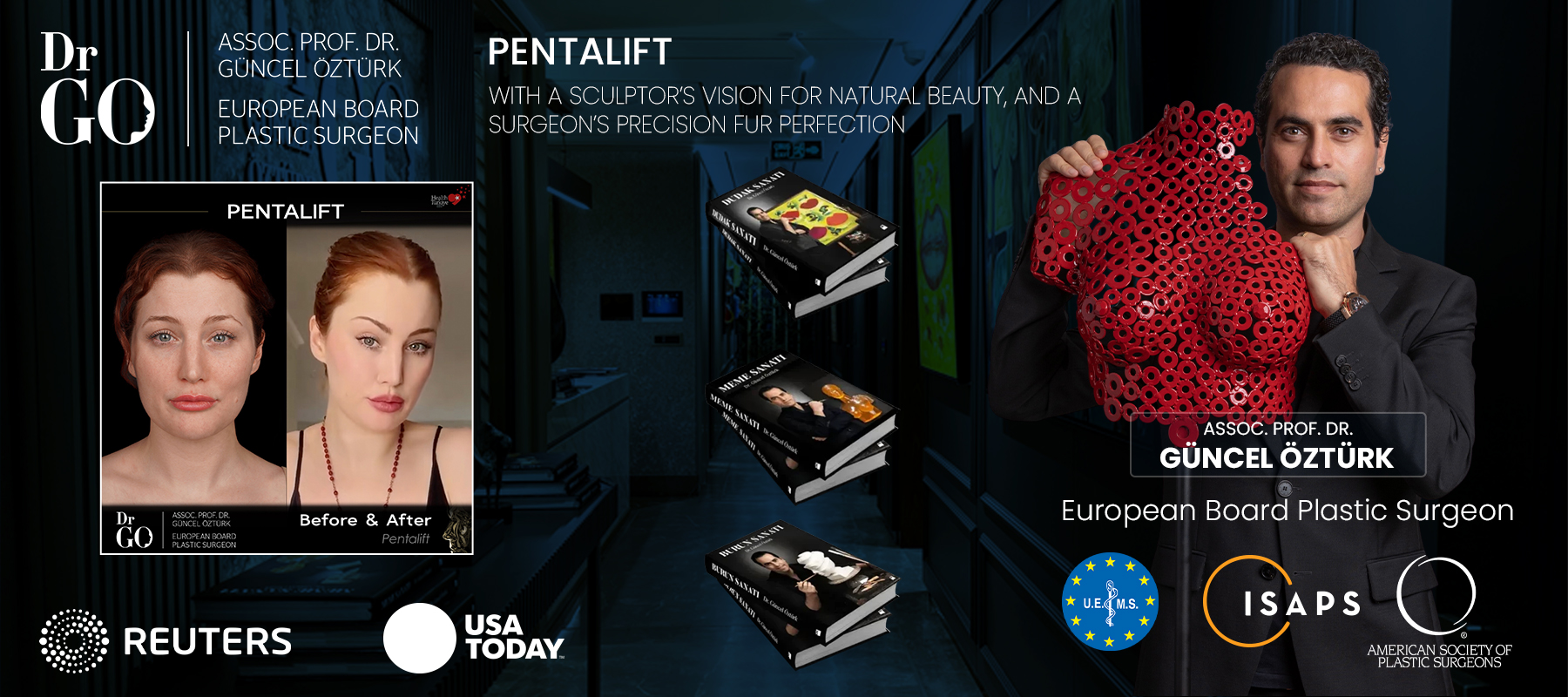
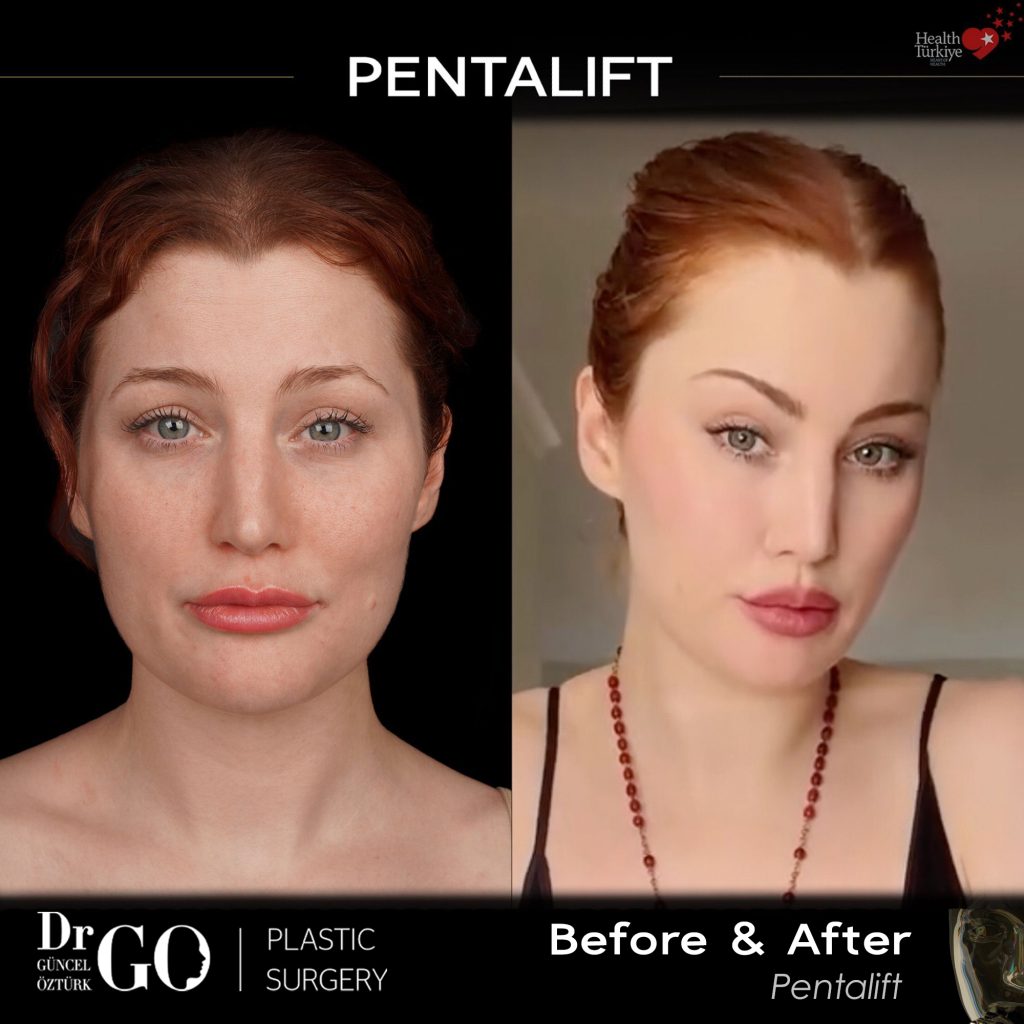
The Temporal Lift is one of the five key procedures within Assoc. Prof. Dr. Güncel Öztürk’s proprietary Pentalift technique, an advanced endoscopic approach to upper and mid-face rejuvenation. Specifically targeting the outer brow and temple area, the Temporal Lift gently elevates sagging skin, refines the brow tail, and smooths the temple transition, creating a naturally refreshed look. As part of the 1–5 Pentalift system, this procedure is fully customized to each patient’s anatomy and aesthetic goals, ensuring subtle, harmonious results while preserving natural facial expressions. The minimally invasive method allows precise correction, minimal scarring, and a shorter recovery period, making it an ideal choice for patients seeking a youthful yet authentic appearance in Istanbul, Turkey.
What Is Endoscopic Pentalift Procedure?
The endoscopic Pentalift procedure is a modern aesthetic surgery technique that provides simultaneous rejuvenation of the upper and mid-face regions. It targets the forehead, eyebrows, temples, outer eye area, and midface to achieve a more dynamic, balanced, and naturally youthful facial expression.
As the aging process progresses, factors such as genetics, sun damage, and gravity gradually lead to a loss of skin elasticity. This results in aesthetic changes such as drooping eyebrows, forehead laxity, sagging around the eyes, and volume loss in the midface. Consequently, the face may appear more tired and aged over time.
There are various treatment approaches for these signs of aging. While traditional surgical methods offer long-lasting results, non-surgical procedures usually provide more limited and temporary effects. The endoscopic Pentalift technique, however, is a modern minimally invasive approach that combines a faster recovery period with long-lasting and natural-looking results.
Pentalift Content (5 Components)
- Forehead Lift
- Brow Lift
- Temporal Lift
- Midface Lift
- Almond Eye Lift
How Dr. Güncel Öztürk Reads Your Eye-Area Anatomy
A great temporal lift plan starts with a careful reading of anatomy. Two patients can say, “My eyes look tired,” but their underlying cause can be completely different. One may have true brow tail descent, while another may have mainly eyelid skin excess. Another might have volume changes at the temples that create shadowing and an aged contour, even if the brow position is relatively stable. Dr. Öztürk’s evaluation typically looks at the eye area as a connected structure rather than an isolated complaint.
He pays close attention to the brow tail’s resting position and how it behaves with facial movement, because brow dynamics matter. Some patients subconsciously raise their brows to compensate for heaviness, and that can hide the true anatomy until the face is fully relaxed. He also evaluates the relationship between the brow tail and the outer eyelid fold, because a temporal lift works best when the heaviness is concentrated laterally.
To guide planning, the assessment often considers several interconnected details, including:
- The brow tail’s position relative to the orbital rim and how much it contributes to lateral hooding
- The distribution of eyelid skin (central vs outer), and whether the eyelid itself is the main limiting factor
- Temple contour (fullness or hollowing) and how that affects the transition from forehead to outer eye
- Natural asymmetry between the right and left sides, both at rest and with expression
This anatomical reading is what determines whether a temporal lift will be enough on its own, whether it should be paired with upper eyelid surgery, or whether a different brow strategy would better match the patient’s aging pattern.
Dr. Güncel Öztürk’s Strategy to Avoid an Over-Lifted Look
The fear of looking “surprised,” “pulled,” or unnaturally arched is one of the most common concerns patients express about any brow-adjacent surgery. Dr. Öztürk’s strategy to avoid over-lifting begins with a simple principle: the face must look natural in motion, not just in a still photo. The eyebrows and temple area are highly expressive; even small changes can affect how the eyes communicate emotion.
A key part of natural planning is the direction of lift. If elevation is too vertical, it can create an unnatural brow arch and a tense upper-face expression. If it’s too aggressive laterally, it can distort the temple area or create an odd shape at the brow tail. A refined plan chooses a controlled vector that supports the outer brow in a way that matches the patient’s natural brow geometry.
Restraint is also essential. Many of the best outcomes come from modest elevation—often just enough to reduce heaviness and restore the “lighter” look the patient remembers. Overcorrection tends to be the source of unnatural results, and it can also make the face look less like the patient. Dr. Öztürk emphasizes balance over maximal change: improving symmetry without forcing perfect equality, and preserving the patient’s natural brow identity rather than imposing a fashionable shape.
Finally, avoiding an over-lifted look also means considering the entire upper face, including forehead proportions and eyelid anatomy. If eyelid skin excess is significant, a temporal lift alone may not create the clean, bright effect the patient wants, which can lead patients to desire more and more lift. In reality, the better solution is often a more balanced plan rather than a higher brow.
The Brighter Eye Effect
Most patients don’t describe their goal with technical terms—they say, “I want my eyes to look brighter,” or “I want to stop looking tired in photos.” The temporal lift is designed to achieve that effect by refining the outer brow position and reducing the shadowing and heaviness that gathers near the outer eyelid.
When the brow tail sits slightly higher and the temple transition looks smoother, the eye area often appears more open. Makeup can sit more cleanly, eyeliner can look more lifted, and the upper face can look calmer and less weighed down. This is why temporal lifting is sometimes thought of as a “confidence procedure”—small refinements that have an outsized impact on how you feel about your expression.
In Dr. Öztürk’s approach, the “brighter eye” effect is not about dramatically changing eye shape. It’s about restoring a youthful frame around the eye so the eye itself reads more clearly. The best outcomes preserve the patient’s natural eye identity while gently improving the surrounding support. When done with precision, the result can look like better sleep, less stress, or a naturally refreshed version of the patient—rather than a visible surgical change.
Precision at the Temples
Because the temporal lift works in a small, visible zone, precision matters. Dr. Öztürk plans the brow tail position with a focus on how both sides will look together, but also how each side matches the patient’s natural asymmetry. It’s normal for one brow to sit slightly higher, for one eye to be more open, or for one side to show more hooding. The goal isn’t to erase these human differences; it’s to prevent them from becoming more noticeable and to avoid creating a “manufactured” symmetry that looks artificial.
He also evaluates brow tail position in relation to forehead height, hairline shape, and cheekbone structure. A brow tail that is lifted too high can look disconnected from the rest of the face. A brow tail that is lifted in a way that doesn’t match the forehead’s natural shape can create an odd contour at the temple. Planning is therefore not just about “up,” but about where and how to support the brow tail so it looks integrated.
This is also where expectations are shaped realistically. A temporal lift can improve lateral heaviness and refresh the outer eye frame, but it won’t replace the benefits of a full brow lift in someone whose entire brow line is low. Likewise, it won’t replace upper eyelid surgery if there is significant eyelid skin redundancy. Precision planning means choosing a plan that fits the patient—not forcing the same lift pattern onto every anatomy.
How Dr. Güncel Öztürk Protects Natural Expression and Avoids Overcorrection
Protecting natural expression is not only an aesthetic goal; it’s also part of creating a comfortable and stable result. Overcorrection can lead to tension, prolonged swelling, or an uncomfortable feeling of tightness during healing. It can also cause the brow to look “set” in a way that doesn’t match the patient’s natural emotional range.
Dr. Öztürk’s approach emphasizes controlled support and careful tissue handling so the skin can re-drape smoothly rather than being forced into a new position by tension alone. When deeper support is balanced and the lift is conservative, the eye area tends to settle more naturally, and the result remains softer over time.
Avoiding overcorrection also means resisting the temptation to chase an overly dramatic “snatched” look. That style can be attractive on social media, but it doesn’t always translate well in real life, especially as tissues heal and settle. A refined temporal lift is meant to blend with the face, not dominate it. The procedure should make you look more like yourself at your best—rested, bright, and naturally elevated—rather than visibly altered.
Frequently Asked Questions
What’s the main difference between a temporal lift and an endoscopic brow lift?
A temporal lift focuses mainly on the outer third of the brow (brow tail) and the temple area to create a subtle, lateral “eye-opening” refresh. An endoscopic brow lift addresses a wider brow/forehead area, lifting more of the entire brow line with small incisions hidden in the scalp and an endoscopic technique, which can be better when the whole brow sits low rather than just the outer portion.
Will a temporal lift reduce upper eyelid “heaviness” near the outer corners?
In the right candidate, yes. By gently elevating the brow tail, a temporal lift can reduce the “hooded” look at the outer upper eyelid, making the eye area look lighter. If the heaviness is mostly due to excess eyelid skin, upper blepharoplasty may be needed for the cleanest improvement.
How does Assoc. Prof. Dr. Güncel Öztürk decide how much lift is “enough”?
He aims for a lift that restores a rested, natural brow position without changing your identity. The “enough” point is determined by your anatomy, brow shape, symmetry, eyelid support, and how your brow moves when you speak and smile—so the result looks natural both at rest and in motion.
Where are temporal lift incisions hidden, and how long do they take to fade?
Incisions are typically hidden within the hairline at the temples, designed to stay discreet as hair grows through and around the area. Scars often fade noticeably over 3–6 months, with continued softening up to 12 months, depending on skin type, aftercare, and sun protection.
Can a temporal lift help with crow’s feet, or is that a different treatment?
A temporal lift may slightly improve the tension and contour near the outer eye, but crow’s feet are mainly dynamic wrinkles caused by muscle movement, so treatments like botulinum toxin are usually more effective for that specific concern. Many patients combine approaches for the most balanced result.
How soon can I wash my hair, exercise, and return to work after a temporal lift?
Hair washing is often possible within a few days (based on incision care instructions). Many patients return to desk work in about 5–7 days if bruising is mild, while exercise is usually restarted gradually—light activity first, with more intense workouts often delayed until around 2–3 weeks (and sometimes longer) depending on healing and surgeon guidance.
How long do results typically last, and what affects longevity?
Results commonly last 5–10 years, sometimes longer, depending on genetics, skin quality, sun exposure, smoking, weight changes, and how your brows naturally age. Good skincare and sun protection can help maintain the refreshed look.
Can a temporal lift be combined with upper blepharoplasty or a facelift in one session?
Yes. A temporal lift is often combined with upper blepharoplasty when eyelid skin excess contributes to heaviness, and it can also be paired with a facelift for patients seeking comprehensive rejuvenation. The safest combination depends on your anatomy, health profile, and the extent of surgery planned.
What should I expect in the first 7–14 days (swelling, tightness, numbness)?
Most patients experience mild to moderate swelling and possible bruising around the temples and outer eye area, with a feeling of tightness that gradually eases. Temporary numbness or tingling near the incision site can occur and typically improves over weeks as healing progresses, while the overall look becomes more “presentable” as swelling settles—often within 7–14 days for many patients.