

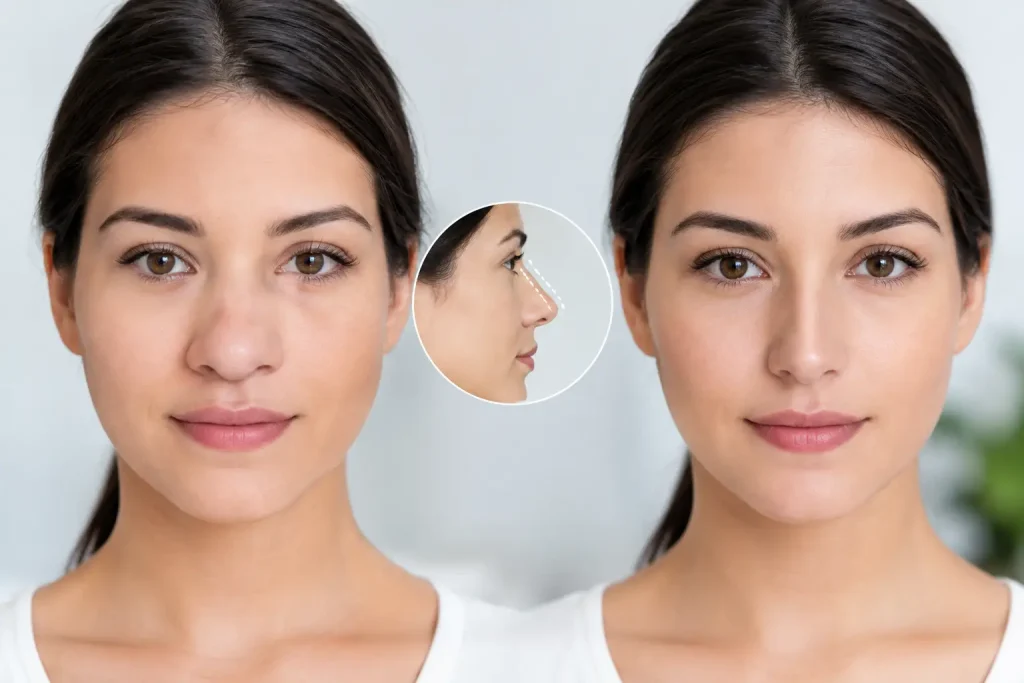
A nose can appear wide for very different reasons: a broad bony bridge, thick skin, a rounded nasal tip, flared nostrils, or a combination of each. That distinction matters because the answer to “can rhinoplasty correct a wide nose?” is yes, but refined results depend on identifying exactly where the width originates and designing changes that remain in harmony with the face.
For sophisticated rhinoplasty, narrowing is never simply about making the nose smaller. The objective is proportion. A beautifully designed nose should complement the eyes, cheekbones, lips, chin, and facial width while preserving character and natural expression. When the nose is narrowed without adequate structural planning, it can look pinched, overly operated, or compromise nasal airflow. Precision is what separates reduction from refinement.
Can Rhinoplasty Correct a Wide Nose?
Rhinoplasty can improve the appearance of width in the upper bridge, middle vault, nasal tip, and nostril base. However, each area calls for a different surgical approach. A patient with a wide nasal bridge does not necessarily need the same technique as someone whose concern is primarily a bulbous tip or wide nostrils.
The most successful result comes from a personalized analysis rather than a standard “narrow nose” request. Bone thickness, cartilage strength, skin quality, asymmetry, facial proportions, ethnicity, previous surgery, and breathing function all influence what can be achieved safely and elegantly.
A narrower nose may be appropriate for one face, while another patient may benefit from a subtle refinement that preserves a stronger, more distinctive profile. The goal is not to reproduce someone else’s nose. It is to create a version of your own nose that feels balanced, composed, and authentically yours.
Where Nasal Width Comes From
A broad nasal bridge
Width across the upper third of the nose is often created by the nasal bones. In primary rhinoplasty, controlled osteotomies may be used to reposition these bones and create a more refined bridge. This is a highly technical part of the operation. The bones must be mobilized with accuracy so the bridge becomes narrower without creating irregular contours, an unnatural “scooped” appearance, or obstruction within the nasal airway.
In some patients, the bridge only appears wide because it lacks definition. A carefully shaped dorsal contour can create more elegant light reflection and visual refinement without aggressive narrowing. This is where aesthetic judgment matters as much as surgical technique.
A wide or bulbous tip
The lower third of the nose is defined by cartilage, soft tissue, and skin. A broad tip can be caused by widely spaced tip cartilages, weak cartilage support, thick skin, or a naturally rounded tip shape. Tip refinement may involve reshaping and repositioning the cartilages, improving their support, and using precisely placed sutures or grafts when indicated.
The phrase “tip reduction” can be misleading. Removing too much cartilage may initially look narrow, yet later lead to collapse, asymmetry, or a pinched result. Modern structural rhinoplasty prioritizes controlled reshaping and support. The aim is a tip that is refined from the front, graceful in profile, and stable as swelling resolves.
Wide nostrils or a broad nasal base
Some patients are most concerned by nostril flare or width at the base of the nose. Alar base reduction can selectively reduce nostril width by removing a very small amount of skin in naturally concealed areas. It is not required in every wide-nose rhinoplasty, and it should never be performed automatically.
The surgeon must consider nostril shape, facial proportions, scar placement, and the relationship between the nostrils and the tip. Excessive narrowing can make the nostrils look unnatural or affect breathing. A conservative, measured adjustment generally ages better than an overcorrected one.
Why Skin Thickness Changes the Plan
Skin is often the deciding factor in how sharply a nose can be refined. Thin skin reveals even small changes in bone and cartilage, but it can also expose irregularities. Thick skin offers more coverage, yet it may soften the definition of a newly shaped tip and make final refinement appear more gradual.
Patients with thicker skin can still achieve meaningful improvement, particularly in projection, contour, and tip support. Expectations must simply be realistic. Rather than promising an extremely narrow, sharply sculpted tip, a responsible plan focuses on creating clearer structure beneath the skin and improving overall facial balance.
Swelling also tends to last longer in thicker-skinned noses, especially around the tip. Early postoperative photographs rarely represent the final result. The bridge often settles first, while tip definition continues to emerge over many months.
The Balance Between Narrowing and Breathing
Aesthetic rhinoplasty should protect function. The internal nasal valves – narrow areas responsible for efficient airflow – can be weakened if the middle portion of the nose is narrowed without structural support. This is one reason why aggressive reduction techniques can produce long-term breathing concerns.
When appropriate, cartilage grafting can reinforce the nasal framework while maintaining a more refined appearance. This is particularly relevant for patients with naturally weak cartilage, a history of trauma, prior rhinoplasty, or existing breathing difficulty.
A premium rhinoplasty plan considers the nose as an integrated architectural structure. The external form, internal airway, cartilage support, and soft-tissue envelope must work together. A nose that photographs beautifully but does not breathe well is not a successful result.
What Results Can You Realistically Expect?
Most patients can expect a wide nose to look more defined, proportionate, and harmonious after rhinoplasty. The degree of change depends on anatomy and the limits of safe tissue modification. A patient with very broad nasal bones and thin skin may see a more dramatic visible narrowing than a patient with thick skin and broad soft tissue at the tip.
Facial proportions also guide the design. Narrowing the nose too far can make the eyes appear farther apart, exaggerate a prominent chin, or create a mismatch with naturally strong cheekbones. The most compelling results are often subtle enough that people notice you look refreshed, elegant, or more balanced without immediately identifying why.
Digital imaging and 3D planning can be valuable communication tools during consultation. They help clarify aesthetic priorities and explore realistic directional changes. They are not guarantees. Healing, skin behavior, and individual anatomy always influence the final outcome.
Choosing the Right Surgical Approach
Wide-nose correction may be performed through open or closed rhinoplasty, depending on the anatomy and surgical objectives. Open rhinoplasty provides direct visualization of the cartilage framework and can be especially useful for complex tip work, asymmetry, structural grafting, or revision cases. Closed rhinoplasty may be suitable for selected patients requiring more limited changes.
The approach should follow the design, not the other way around. A surgeon’s ability to assess the face in three dimensions, anticipate healing, and execute fine structural adjustments is more meaningful than a one-size-fits-all preference for a particular technique.
At Dr. Güncel Öztürk’s practice, rhinoplasty planning is approached as both a medical and artistic process. The consultation considers nasal anatomy alongside expression, gender-specific aesthetics, ethnic identity, and the visual rhythm of the entire face. For international patients, this individualized planning is especially valuable before traveling for surgery in Istanbul.
Recovery After Wide-Nose Rhinoplasty
A nasal splint is commonly worn for approximately one week. Bruising and swelling around the eyes vary, but many patients feel socially presentable after 10 to 14 days, often with makeup if desired. The nose will look improved when the splint is removed, yet it will not be final.
As swelling decreases, the bridge becomes more refined and the tip gradually gains definition. Residual tip swelling can persist for up to a year or longer, particularly when thick skin or significant tip restructuring is involved. Following postoperative instructions, avoiding pressure on the nose, and attending scheduled reviews support a more predictable recovery.
Patience is part of the aesthetic process. Rhinoplasty is not an instant transformation but a carefully staged evolution of shape, support, and softness.
A wide nose can be corrected with rhinoplasty, but the finest outcomes do not chase narrowness at any cost. They create a nose with clearer definition, stable function, and a presence that belongs naturally to the face it was designed for.