


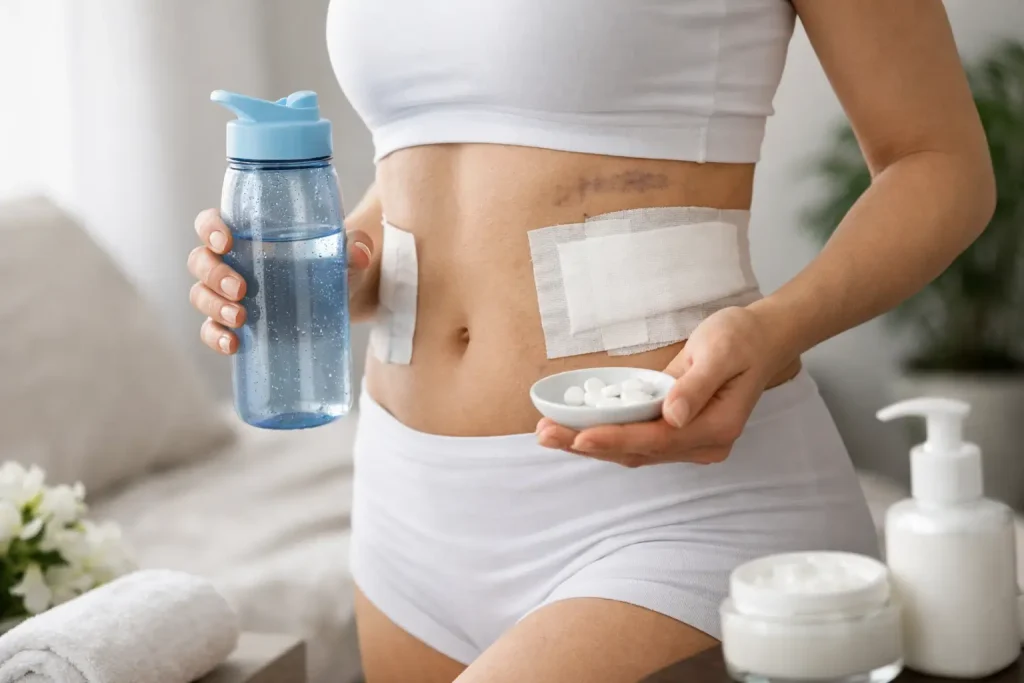
The first week after body contouring often shapes the final impression patients carry of the entire experience. Not because the result is visible immediately, but because this is the period when swelling, drainage, garment pressure, and restricted movement raise the most questions. That is exactly why understanding Liposuction Aftercare Tips matters – not as generic aftercare, but as the framework that protects both healing quality and aesthetic precision.
Why aftercare matters after liposuction
Liposuction is not simply fat removal. In expert hands, it is a contouring procedure designed to refine proportion, transitions, and silhouette. The healing phase is where that surgical design settles into the body. Swelling must resolve in a controlled way, tissues need time to adhere smoothly, and your daily decisions can influence comfort, recovery speed, and even how evenly the treated areas mature.
Patients sometimes assume the surgery itself determines the result and recovery is secondary. In reality, postoperative discipline is part of the treatment. Compression, mobility, hydration, and timing of activity all support the body as it adapts to its new contours.
Liposuction Aftercare Tips in the first 72 hours
The earliest phase is usually the most physically noticeable. Expect drainage from incision sites, a feeling of pressure or soreness, and swelling that can make the treated area appear larger before it looks smaller. This is normal. Early recovery is not the moment to judge the cosmetic result.
During this period, compression garments should be worn exactly as advised by your surgeon. They help control swelling, support tissue adaptation, and reduce the risk of irregular healing. A garment that is too loose may not provide enough support, while one that is excessively tight can increase discomfort and create unwanted pressure points. Fit matters.
Walking begins early, even if only in short intervals around the room. This is not exercise. It is circulation support. Gentle movement lowers the risk of stiffness and helps reduce certain postoperative risks associated with prolonged inactivity.
You will also need to protect the incision areas. Keep dressings clean and dry as instructed, and do not improvise with creams, oils, or home remedies unless your surgeon has specifically approved them. Skin that has undergone liposuction is already under stress. Simplicity is usually safer than over-treatment.
Compression, swelling, and shape changes
One of the most misunderstood aspects of liposuction recovery is the timeline. Swelling is not a minor side effect. It is a central part of healing and can fluctuate throughout the day, often worsening with prolonged standing, heat, salty meals, or early overactivity.
This is why patients are advised to wear compression garments consistently for the recommended period. In some cases, the schedule changes over time – full-time wear initially, then daytime-only use later. The exact duration depends on the treatment area, the amount of fat removed, skin quality, and whether liposuction was combined with another procedure.
Temporary firmness, numbness, asymmetry, and uneven swelling can also occur. These findings are often alarming to patients who expect a smooth, immediate transformation. But tissues recover in layers, not all at once. One side may appear more swollen than the other for a period of time. A lower abdomen may stay firm longer than the waist. That does not automatically signal a problem.
Managing pain without disrupting recovery
Discomfort after liposuction is often described less as sharp pain and more as soreness, tenderness, and pressure – similar to an intense workout, but deeper and more diffuse. Pain medication should be taken exactly as prescribed, particularly in the first few days when movement may feel more difficult.
What matters here is balance. You should be comfortable enough to rest, walk, and breathe deeply, but not so overconfident that you return to normal activity too quickly. Feeling better on day four does not mean the tissues are fully stable.
If your surgeon recommends avoiding certain medications or supplements before and after surgery, continue to follow that instruction carefully. Some substances can increase bleeding or bruising risk. Others can interfere with healing in less obvious ways.
Activity, work, and exercise
Many patients ask the same question in different forms: When can I get back to normal? The more accurate answer is that recovery is staged. Light walking begins early. Desk-based work may be possible within days for some patients, while those with physically demanding routines need longer. Exercise, lifting, intense stretching, and core engagement usually return more gradually.
This is one of the clearest examples of where Liposuction Aftercare Tips depends on the individual case. A small, targeted treatment of the chin or arms is not the same as larger-volume contouring of the abdomen, flanks, thighs, or multiple zones. Combined procedures also change the timeline.
Trying to accelerate recovery by “pushing through” often backfires. Increased swelling, discomfort, and delayed tissue settling are common when patients resume strenuous activity too soon. Respecting the healing rhythm tends to produce the more elegant result.
Hydration, nutrition, and smoking
Refined outcomes are supported by very basic physiology. Adequate hydration helps circulation and recovery. A protein-conscious diet supports tissue repair. Excess sodium can aggravate swelling, and alcohol can worsen dehydration and bruising during the early phase.
Smoking and nicotine exposure deserve special emphasis. Nicotine constricts blood vessels and can compromise healing quality. In aesthetic surgery, that matters not only for safety but for how beautifully the tissues recover. Patients who invest in a carefully planned body contouring procedure should protect that investment by following strict nicotine restrictions before and after surgery.
Weight stability also matters. Liposuction is a sculpting procedure, not a substitute for long-term weight management. Significant weight gain after surgery can blur definition and alter proportion, while major weight loss can change skin behavior in ways that affect the final look.
Showering, skin care, and scar awareness
Patients are often eager to shower, moisturize, and resume their preferred skin-care routine. Timing matters. Follow your surgeon’s specific instructions regarding when showering is allowed and how to manage the garment during hygiene.
Once the skin is ready, gentle care is best. Avoid aggressive massage, heated treatments, body scrubs, or devices unless they are specifically recommended as part of your recovery plan. Not every patient needs the same postoperative adjuncts. Some benefit from lymphatic-style treatments or structured massage protocols, while others should keep the recovery plan minimal.
Incisions used for liposuction are small, but scar quality still depends on healing behavior, skin type, tension, sun exposure, and aftercare. Protecting healing skin from direct sun is a quiet but important detail. Pigment changes can make even tiny scars more noticeable if they are exposed too early.
When to contact your surgeon
Some symptoms are expected. Others should prompt immediate medical guidance. Increasing pain that feels out of proportion, one-sided swelling that appears suddenly, shortness of breath, fever, spreading redness, unusual drainage, or calf pain should never be dismissed as routine recovery.
Patients pursuing aesthetic surgery at a high standard should expect close postoperative communication, not guesswork. Precision in surgery should be matched by precision in follow-up. If a symptom feels different rather than simply uncomfortable, it is worth asking.
The emotional side of recovery
Even confident, well-prepared patients can feel unsettled during the first few weeks. Swelling distorts shape. Bruising changes color dramatically. The body can feel unfamiliar before it looks refined. This phase is temporary, but it requires patience.
A sophisticated result rarely reveals itself all at once. It emerges as swelling resolves, skin contracts, and transitions soften. The goal is not to look “done” overnight. The goal is to heal into a contour that looks intentional, balanced, and natural.
For patients who value a specialist-led aesthetic approach, aftercare should be seen as part of the artistry. Surgical technique creates the contour, but recovery allows that contour to mature. At a clinic such as DRGO Clinic, where body design is approached with both technical discipline and aesthetic judgment, the healing phase is never an afterthought.
The best thing you can do after liposuction is often the least glamorous – follow instructions precisely, stay patient longer than you think you need to, and let good surgery reveal itself on the body’s own timeline.